Ordering appetizers as a meal works best when you pick two or three starters that together cover something filling, some protein and some vegetables, rather than one large main. It is a common way to eat lighter and spend less, and nutrition professionals recommend it too: a tip sheet from the Academy of Nutrition and Dietetics suggests that for a lighter meal you can order an appetizer in place of a main course. The steps below show how to do it without leaving hungry.
Key takeaways
- Choose starters that add up to a balanced plate: a filling base, protein and vegetables.
- One or two appetizers per person is usually enough; ask your server about size first.
- Prefer grilled, steamed, roasted or baked starters over a table full of fried ones.
- Ask for sauces on the side and hold the bread until the food arrives.
Step 1: Read the starter menu for size
Starters vary much more than mains. Some are a few bites; others, such as loaded fries, nachos or dumpling plates, are close to a main in volume. Look at the description for clues like “for sharing,” piece counts or “served with” sides. Our guide to how restaurant portion sizes affect value explains how to read those clues.
Photos on the wall or on neighboring tables help too. If a starter you are considering keeps landing on tables around you, take a look at how big it is before you commit.
If you cannot tell, ask. “Would two of these make a meal for one?” is a question servers hear often and answer honestly.
Step 2: Build appetizers as a meal, not a snack
The trick to making appetizers as a meal satisfying is variety. A plate of fried bites leaves most people peckish an hour later. Mix categories instead.
| Role on your plate | Appetizer examples | Why it matters |
|---|---|---|
| Filling base | Flatbread, dumplings, bean dishes, rice cakes | Keeps you full |
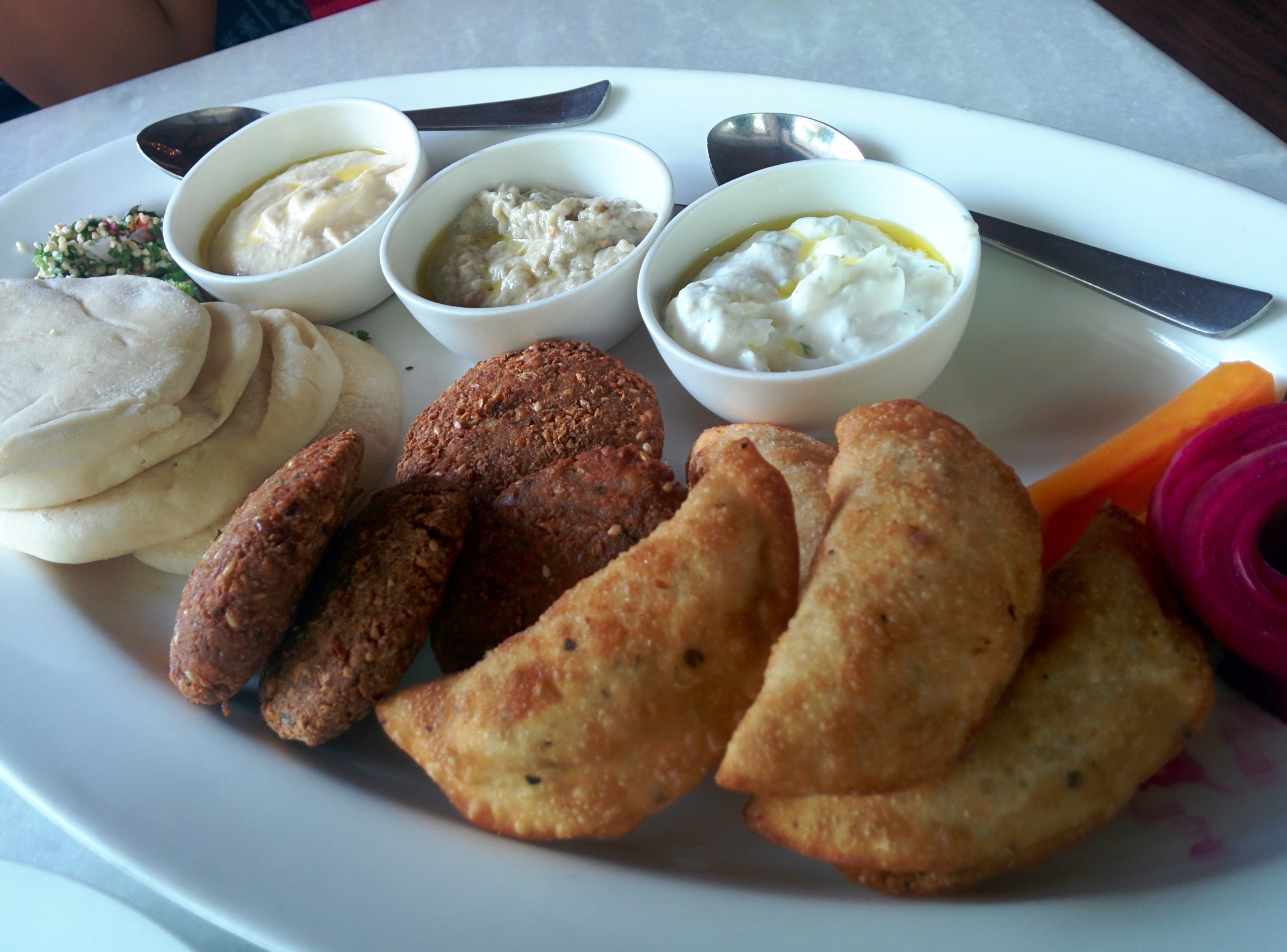
| Protein | Grilled skewers, shrimp, falafel, eggs | Staying power |
| Vegetables | Side salad, soup, roasted vegetables, slaw | Freshness and fiber |
| Something to share | Dips with bread, a sampler plate | Good value across a table |
The same Academy tip sheet suggests beginning with soup or salad as a way to include more vegetables, then following with a light main. When you are building a meal from starters, a soup or salad can play that role.
Step 3: Choose the cooking method
Menu wording tells you a lot. The Academy’s Healthy Eating on the Run tip sheet lists baked, braised, broiled, grilled, poached, roasted and steamed as terms that may indicate a healthier item, and batter-fried, pan-fried, buttered, creamed, crispy and breaded as terms that usually mean more saturated fat and calories.
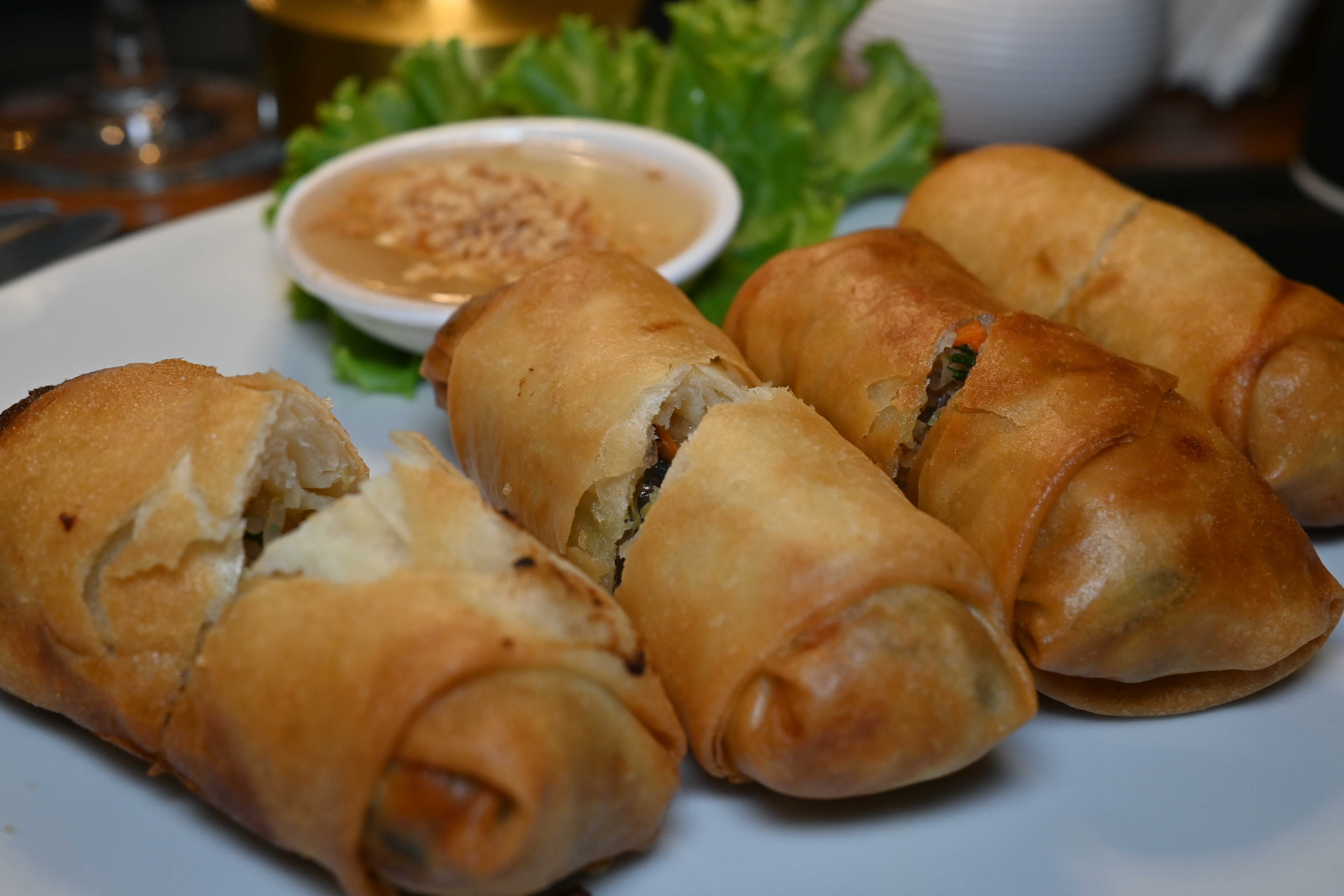
You do not need to avoid fried food entirely. Just make it one part of the set rather than all of it. A crisp spring roll alongside a salad and a grilled skewer is a very different meal from three fried platters. It also travels better: grilled and roasted starters usually reheat well the next day, while fried ones tend to go soggy.
Step 4: Make simple requests
Small requests make starters work harder as a meal.
- Sauces and dressings on the side. You control how much you use, and leftovers keep better.
- Hold the bread or chips until the food comes. The tip sheet notes that hunger may drive you to fill up on them before your meal arrives.
- Ask to swap a side. A side salad in place of fries is a common, easy request.
- Order everything at once. It stops you adding plate after plate as you go.
- Drink tap water. It is the simplest saving on the table, and our guide to asking for free tap water covers how.
Step 5: Know when a main is better value
Appetizers are not always the cheaper route. Depending on the menu, starters can work out pricier per bite than mains, and two premium starters may cost more than one generous main course. Compare before you order: if one main would feed you with leftovers for tomorrow, that may be the better deal. Starters win when you want variety, a lighter meal, or when mains are oversized and you cannot take food home.
Happy hour is the other great time for this approach, since many bar menus are essentially discounted starters. See our step-by-step guide to happy hour food deals for how to make that work.
Frequently asked questions
Is it rude to order only appetizers at a restaurant?
No. Ordering starters as your meal is common, and the NIDDK’s own eating-out advice suggests ordering one or two healthy appetizers or side dishes instead of a whole meal. Let your server know so the dishes come out together.
How many appetizers make a meal for one?
Usually two, sometimes three if they are small. Ask your server about portion size, and order a third only if you are still hungry once the first two arrive.
Can I ask for appetizers to come at the same time as everyone’s mains?
Yes. Tell your server you are having starters as your main course, and most kitchens will time them with the rest of the table.
Try it on your next night out
Next time the mains look too big or too pricey, scan the starters for a filling base, a protein and something fresh, then ask about size. Ordering appetizers as a meal is one of the easiest ways to eat well for less. More ideas are in our value dining section.