The most reliable way to save money on groceries is to shop from a written plan and compare unit prices rather than package prices. Those two habits stop impulse buys and make it obvious which size or brand is actually cheaper. Add store brands, seasonal produce and a weekly check of what is already in the fridge, and most households can trim their grocery bill without eating worse, which frees up money for the meals out you really enjoy.
Key facts
- A unit price shows the cost per ounce, pound or other unit, so you can compare different sizes and brands fairly.
- There is no federal requirement for unit pricing; it depends on state law, according to NIST.
- A bigger package is not always cheaper per unit, especially when the smaller one is on sale.
- Food at home prices rose 1.8% in the 12 months to September 2026, compared with 3.5% for food away from home (BLS).
- USDA publishes monthly food plan cost reports you can use to benchmark your own grocery spending.
Why grocery savings matter for your dining budget
Groceries and eating out come out of the same pot. According to the Bureau of Labor Statistics Consumer Price Index release for September 2026, prices for food at home rose 1.8% over the year while food away from home rose 3.5%. Every dollar you save at the supermarket is a dollar you can spend on a meal out without blowing the budget. Our guide to setting an eating-out budget shows how to split the two.
How do you compare unit prices?
The National Institute of Standards and Technology’s Unit Pricing Guide explains that a shelf tag usually shows the retail price on one side and the unit price on the other, often on a colored background, written as a price “per” unit. Its example compares 500 mL of water for $1.05 ($2.10 per liter) with 1 liter for $2.50 ($2.50 per liter): the smaller bottle is cheaper per liter even though the larger one holds more.
- Compare the same unit. Make sure both tags use per ounce, or both per pound, before you decide.
- Check sale tags. A sale price on a small pack can beat the regular unit price of a bulk pack.
- Do the math when there is no tag. Divide the price by the weight or count on your phone calculator.
- Look high and low. Cheaper store brands are often on the top or bottom shelves.
12 grocery habits that save money
- Plan meals for the week before you shop, using what is already in the cupboard. Our meal planning guide walks through it.
- Write a list and stick to it. Unplanned extras are where most grocery overspending happens.
- Compare unit prices on every item you buy regularly.
- Try store brands for staples such as rice, flour, canned tomatoes and frozen vegetables.
- Buy produce in season, when it is plentiful and usually cheaper.
- Use frozen and canned vegetables for meals later in the week, so fresh food does not spoil.
- Buy bulk only for what you use, and only when the unit price is genuinely lower.
- Shop less often. Fewer trips mean fewer impulse purchases.
- Do not shop hungry. It is an old tip because it works.
- Check the fridge before you leave to avoid buying duplicates.
- Use leftovers on purpose, turning one big cook into lunches; see our packed lunch checklist.
- Track your spending for a month so you know what a normal week really costs.
How much should groceries cost?
The U.S. Department of Agriculture publishes monthly cost of food reports for four food plans: Thrifty, Low-Cost, Moderate-Cost and Liberal. Each estimates what a nutritious diet costs per week and month for people of different ages and household sizes. They are a useful benchmark: if your spending is well above the plan that matches your habits, there is likely room to save.
Remember that the plans assume all food is prepared at home. If you eat out several times a week, your grocery bill should be lower than the plan and your dining budget covers the rest.
Which grocery savings are not worth it?
- Driving across town for one deal. Fuel and time can cancel out the saving.
- Bulk packs that spoil. Food you throw away is the most expensive food you buy; our guide to reducing food waste helps.
- Buying cheap items nobody eats. A bargain that sits in the cupboard is not a saving.
Groceries or takeout: where the savings really are
Cooking at home is usually cheaper per meal than eating out, but the gap depends on what you cook and what you would otherwise order. Our comparison of cooking versus eating out breaks down the true cost, including time and ingredients you do not finish. Ready-made supermarket hot food sits somewhere in between.
Frequently asked questions
What is the fastest way to cut my grocery bill?
Shop from a written list based on a weekly meal plan, and compare unit prices for your regular items. Those two changes cut impulse buys and overpaying for packaging.
Are store brands lower quality?
Not necessarily. Many store-brand staples are comparable to name brands. Try them for basics and keep the name brand only where you notice a difference.
Is buying in bulk always cheaper?
No. Check the unit price, and only buy bulk if you will use it before it spoils. A sale on a smaller size can beat the bulk price.
Why do unit prices use different units?
Labeling rules depend on state law and store practice, so one tag may show per ounce and another per pound. Convert them to the same unit before comparing.
How do I know if my grocery spending is high?
Compare it with the USDA food plan that matches your household size and habits, and track a month of receipts to see your real average.
Start with two habits
If you only change two things, shop from a list built around a weekly plan and compare unit prices every time. Add store brands, seasonal produce and smarter use of leftovers as they become routine. The savings give you more room for meals out; more ideas are in our saving strategy guides.
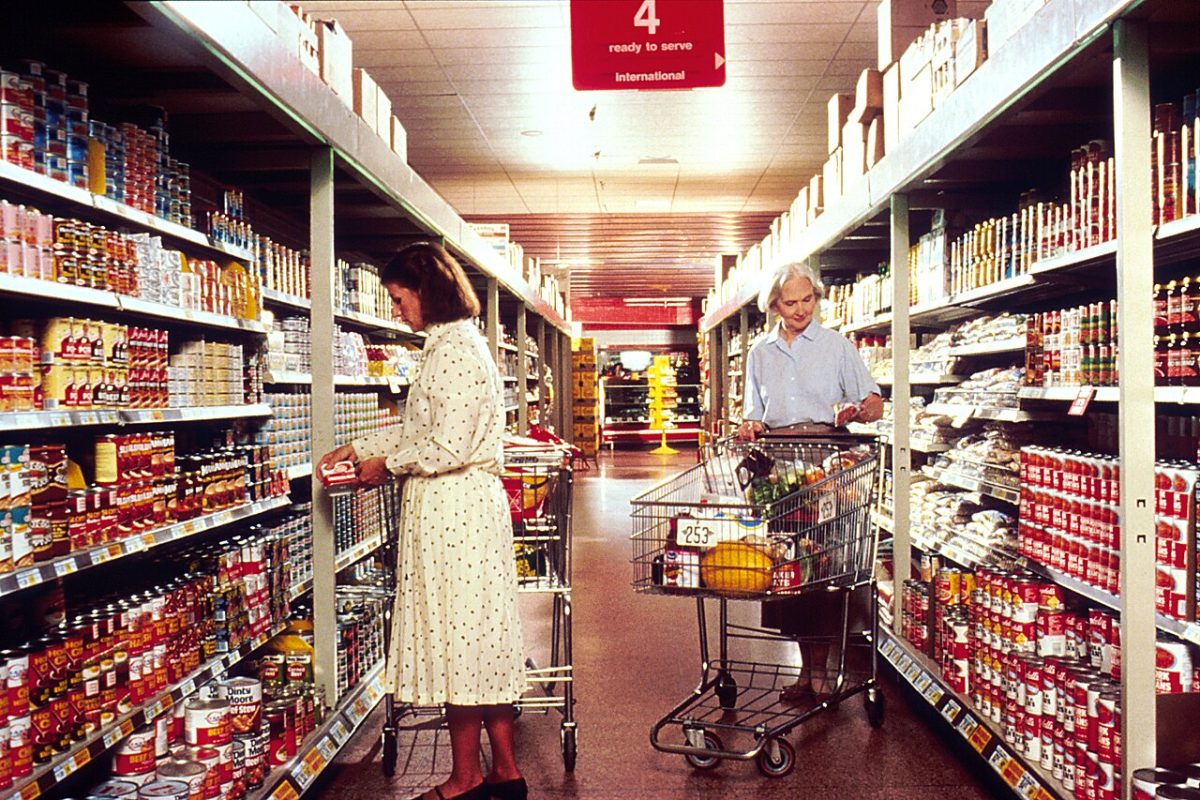
Featured photo: Women grocery shopping by Bill Branson, public domain.